Cash on Delivery can remove an important barrier for customers who prefer to pay only when their order arrives, but the main Cash on Delivery risks begin once a parcel is shipped before payment is guaranteed. This becomes especially important during busy periods like Black Friday and the Christmas season, when higher order volumes can also mean more refused or uncollected parcels. PickupBird helps Shopify merchants manage COD more effectively alongside their delivery options and reduce the risks that come with it.
Understanding these Cash on Delivery risks does not mean merchants should avoid COD altogether. The goal is to decide where it makes commercial sense, recognize which orders create the most risk, and build shipping rules that reduce avoidable losses.
For Shopify merchants, PickupBird can support this process by connecting COD settings with shipping rates and delivery methods, making it possible to control where Cash on Delivery is available as part of the wider shipping workflow.
Why Cash on Delivery Still Matters
COD remains useful because not every shopper wants to pay online before receiving a product. It can be particularly valuable for first-time buyers, customers who are less comfortable paying online, or markets where payment on delivery is already a familiar part of ecommerce.
For merchants, this creates a trade-off. Removing COD can reduce shipping risk, but it can also remove a payment option that some customers actively prefer.
The better question is therefore not simply whether to offer Cash on Delivery, but where, when, and under what conditions it should be available.

The Biggest Cash on Delivery Risks
The fundamental risk behind COD is straightforward: once an order leaves the warehouse, the merchant has already started spending money.
The shipping provider still transports the parcel whether the customer eventually accepts it or not. If delivery fails, return and handling costs may follow, while the merchant receives no revenue from the order.
1. Refused or Uncollected Parcels
A customer places an order, the merchant prepares and ships it, but the parcel is later refused or never collected. The product may eventually return, but the logistics costs do not disappear with it.
A failed COD order can involve:
- outbound shipping costs;
- return shipping costs;
- fulfillment and handling fees;
- additional warehouse work;
- repackaging;
- inventory being unavailable while the parcel is in transit.
This is why the number of COD orders alone does not show whether the payment method is profitable. Merchants should also monitor how many of those orders are successfully delivered and paid for.
2. Not Every Failed COD Order Is the Same
Understanding why COD deliveries fail can help merchants decide what to do about them.
Broadly, unsuccessful orders can come from three different types of customer behavior:
- Careless orders: A shopper places an order without seriously considering whether they will actually collect or pay for it.
- Intentional abuse: Someone deliberately submits a false, duplicate, or unwanted order.
- Changed decisions: A genuine customer intends to purchase but changes their mind before receiving the parcel.
The first two can be particularly costly because the merchant may pay to fulfill and ship an order that had little realistic chance of being completed.
The third is a normal part of ecommerce. Customers change their minds. With COD, however, that decision can become more expensive for the merchant because the product may already be on its way.
Separating these situations makes it easier to introduce targeted safeguards instead of making COD unnecessarily difficult for every customer.
3. Shipping Costs Are Paid Either Way
One of the most important Cash on Delivery risks is also one of the simplest: shipping still costs money when the customer does not pay.
For a low-margin order, outbound delivery, return shipping, and handling can quickly wipe out the profit generated by successful orders. The impact can be even greater for bulky, heavy, or expensive products.
Before offering COD widely, merchants should understand the real cost of an unsuccessful order, including:
- outbound delivery;
- return delivery;
- COD-related shipping provider fees;
- warehouse and fulfillment costs;
- internal administration.
Knowing these numbers makes it much easier to decide whether COD should be available for every order, product, and delivery method.

4. COD Can Create More Operational Work
COD amounts, shipping labels, order statuses, tracking details, and shipping provider data need to remain connected throughout fulfillment. When these processes depend heavily on manual work or separate systems, managing COD becomes increasingly difficult as order volume grows.
Automation cannot remove the financial risk of a refused parcel, but it can reduce the operational burden around successful and unsuccessful COD orders.
Peak Season Can Magnify the Problem
COD deserves additional attention during high-volume periods such as Black Friday and the weeks around Christmas.
More orders mean more parcels moving through the fulfillment process at once. Impulse purchases, changing plans, delivery deadlines, and higher operational pressure can also make returns and unsuccessful deliveries more costly to manage.
Holiday returns are a broader ecommerce issue, not exclusively a COD problem. However, for COD orders, an unsuccessful delivery can be particularly costly because payment has not yet been collected while shipping expenses have already been incurred.
Before peak season begins, merchants should review their own COD data:
- What percentage of COD parcels are successfully delivered?
- Which delivery methods produce the most unsuccessful orders?
- Are particular order values or products more problematic?
- How much does an unsuccessful COD shipment actually cost
- Should the same COD rules apply during peak season?
The answers can help determine whether COD settings should be adjusted temporarily during periods when order volumes and operational pressure are highest.

How to Reduce Cash on Delivery Risks
Cash on Delivery does not have to be an all-or-nothing decision. Merchants can use their own order data and shipping setup to determine where COD makes sense and where additional safeguards are justified.
1. Set Limits Where the Risk Is Highest
COD may not make financial sense for every product or order value.
High-value purchases create greater exposure if the customer refuses the parcel, while very low-margin orders may not absorb repeated shipping and return costs.
Look at historical COD performance and consider whether restrictions make sense for particular order types.
2. Confirm Higher-Risk Orders
An additional confirmation step can be useful for unusually large or suspicious COD orders.
The goal should not be to add friction to every purchase. Instead, focus additional checks on situations where an unsuccessful delivery would create a meaningful loss.
3. Track Failed COD Orders
Do not look only at COD sales. Track COD delivery success.
Compare failed and successful orders by shipping provider, delivery method, market, order value, and season. Patterns can show whether COD itself is causing problems or whether a particular part of the shipping setup needs attention.
4. Turn Off COD for Higher-Risk Delivery Options
Cash on Delivery does not have to be available with every shipping method. If COD creates too many failed or uncollected orders, merchants can keep flexible delivery options while requiring customers to pay in advance.
With PickupBird, COD can be configured for specific Shopify shipping rates. This means a store can offer pickup point or parcel locker delivery while leaving Cash on Delivery unavailable for those rates, so customers can still choose a convenient collection location but complete their payment online before the order is shipped.
This gives merchants a practical way to reduce Cash on Delivery risks without removing pickup point delivery altogether.
5. Make Delivery More Convenient
Not every unsuccessful delivery comes from a customer intentionally refusing an order. Sometimes receiving the parcel is simply inconvenient.
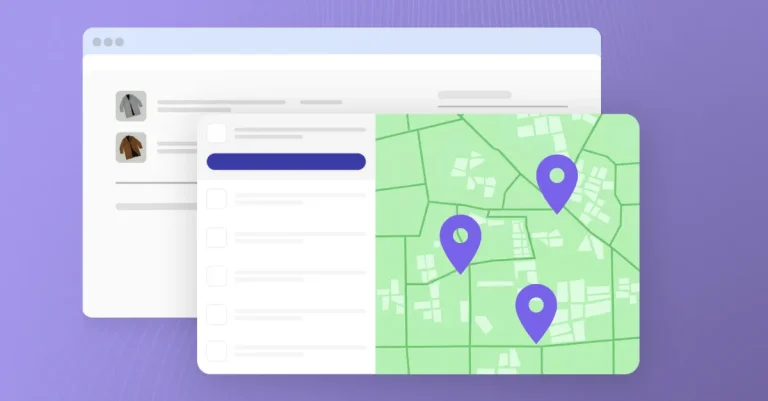
Giving shoppers access to pickup points and parcel lockers can provide more flexibility over where they receive their purchases. PickupBird allows supported pickup locations to be integrated directly into the Shopify shopping journey, helping customers select a delivery option that better fits their routine.
Pickup points do not eliminate COD risk, and COD availability depends on the shipping provider and service. They simply give merchants another way to build a delivery setup around different customer needs.
6. Automate Shipping Where Possible
As COD volume grows, reducing manual work becomes increasingly important.
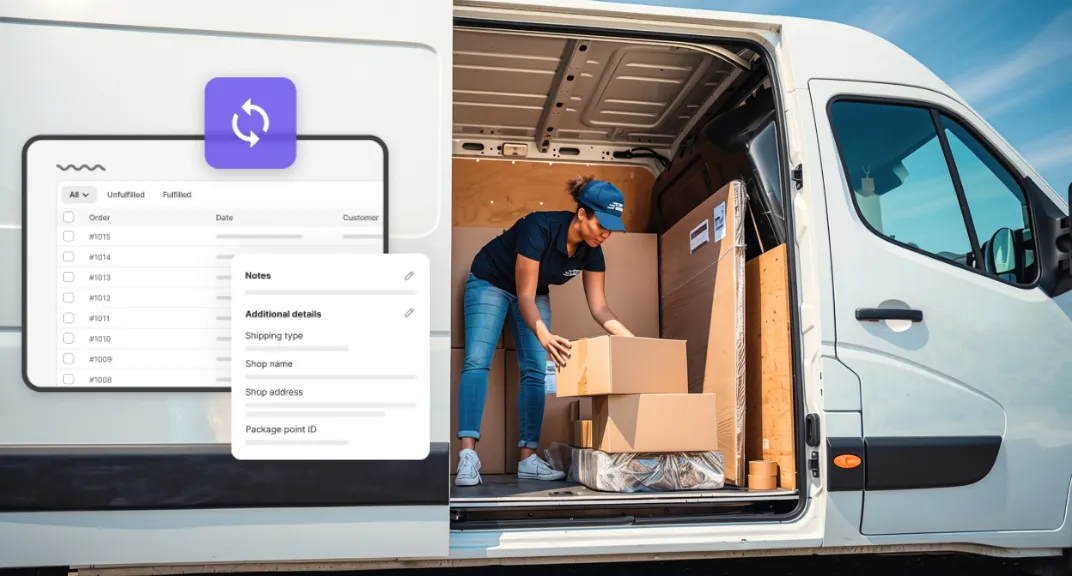
PickupBird helps Shopify merchants manage supported shipping providers, create shipping labels manually or automatically, process orders, and add tracking information to Shopify orders.
Combined with configurable payment methods and shipping rates, this allows COD to become part of the wider shipping workflow instead of a separate process that needs to be managed manually.
How PickupBird Helps Shopify Merchants Manage COD
PickupBird does not promise to eliminate Cash on Delivery risks. A customer can still change their mind, refuse a parcel, or leave an order uncollected.
What the app provides is more control over how COD fits into the store’s shipping setup.
With PickupBird, Shopify merchants can:
- configure COD for specific shipping rates;
- offer COD with or without an additional handling fee;
- keep COD unavailable for delivery rates where they do not want to offer it;
- offer supported home delivery, pickup point, and parcel locker services;
- connect multiple shipping providers;
- generate shipping labels manually or automatically;
- manage orders and tracking information from a connected workflow.
This distinction matters. The aim is not risk-free COD. It is better-controlled COD.
Should You Offer Cash on Delivery in Your Shopify Store?
COD can be valuable when customers actively want to use it and successful orders generate enough value to justify the additional risk. For another store, refused parcels, low margins, or high shipping costs may make the same payment method difficult to justify.
Instead of following a general rule, look at your own numbers:
- How many customers choose COD?
- What percentage successfully receive and pay for their orders?
- How much does a failed delivery cost?
- Which shipping methods perform best?
- Do certain products, order values, or periods generate more problems?
You may find that COD works well for most of your business but should be restricted for particular delivery methods or situations.
Cash on Delivery Is a Risk to Control
Cash on Delivery does not have to be either completely enabled or completely removed.
A more practical approach is to offer COD where customers genuinely value it, restrict it where the financial risk becomes too high, and continually monitor how those orders perform.
For Shopify merchants, PickupBird makes it possible to connect COD settings with the wider delivery workflow, including shipping rates, supported home delivery and pickup options, shipping providers, labels, orders, and tracking.
That gives merchants more control over the central challenge behind COD: giving customers the payment flexibility they want without taking unnecessary shipping risks.
Manage COD and flexible Shopify delivery options with PickupBird.
Frequently Asked Questions
What are the biggest Cash on Delivery risks?
The main Cash on Delivery risks include refused or uncollected parcels, outbound and return shipping costs, additional fulfillment expenses, and more operational work. Because payment is collected later, merchants can incur shipping costs even when an order never generates revenue.
Why do customers refuse COD orders?
Reasons vary. Some customers change their minds after ordering, others place an order without seriously intending to collect it, and some orders may be deliberately false or abusive. Tracking the reasons behind unsuccessful deliveries can help merchants decide where additional COD rules are needed.
Can I disable COD for parcel locker delivery in Shopify?
Yes, COD does not have to be available for every delivery option. PickupBird allows Cash on Delivery to be assigned to specific Shopify shipping rates, so merchants can keep COD unavailable for a parcel locker rate while still offering the delivery method itself.
How does PickupBird help manage Cash on Delivery?
PickupBird allows Shopify merchants to configure COD for specific shipping rates, including an optional handling fee, and manage supported delivery services within the same shipping workflow. Merchants can also manage shipping providers, orders, labels, and tracking information through the app.